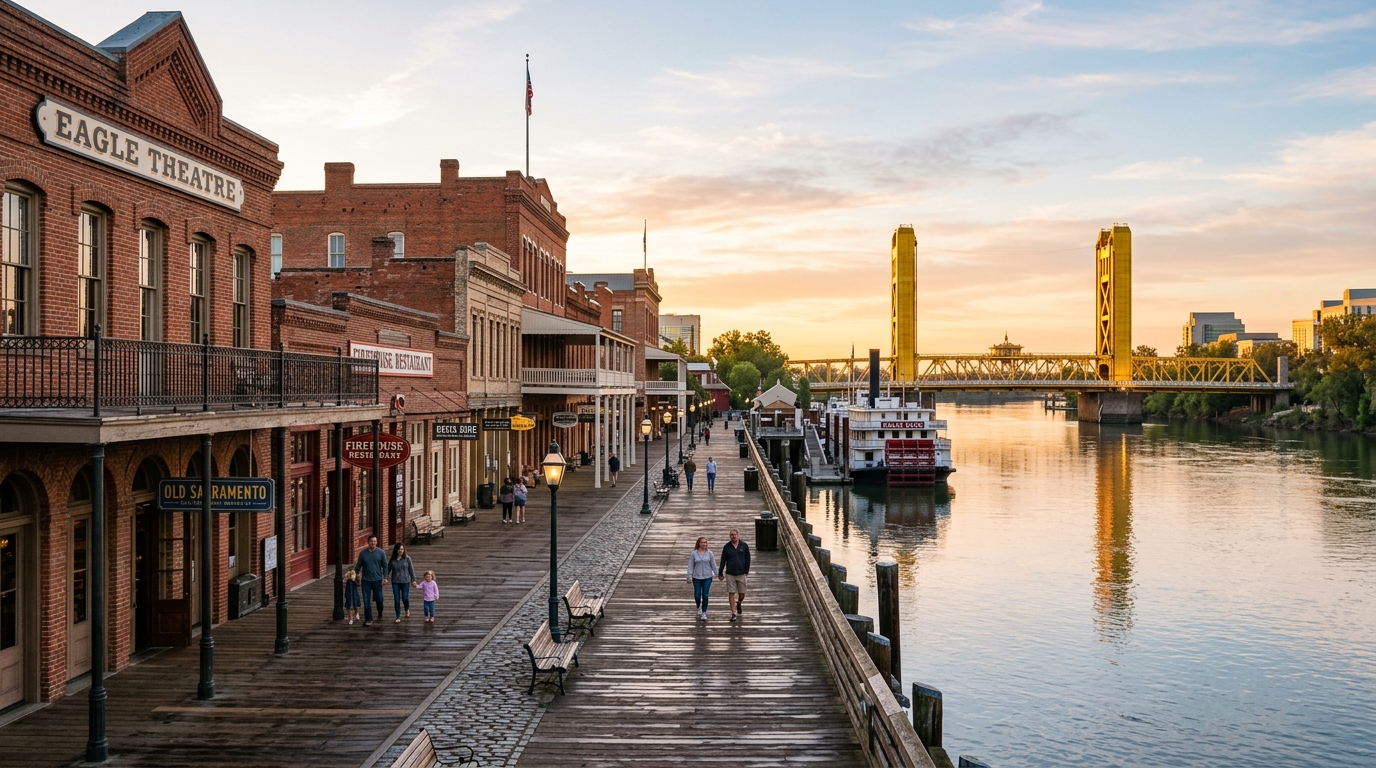
Old Sacramento Waterfront is easy to misunderstand. Visitors often arrive with a long list of shops, museums, river views, historic buildings, train experiences and photo stops, then spend the day moving too quickly to appreciate the district itself. A better visit treats the waterfront as a compact historic neighborhood rather than a collection of boxes to check. Choose one major attraction, leave time to walk the wooden sidewalks and river edge, and build the rest of the day around food, shade and a few flexible discoveries.
The district works especially well for first-time visitors because many experiences sit close together. The California State Railroad Museum, riverfront promenade, historic commercial blocks and seasonal activities can all fit into one day without constant driving. The challenge is deciding what deserves real time. This guide offers a slower, more practical plan that can work for couples, families, solo visitors and Sacramento County residents returning with guests.
Build the Day Around One Anchor Experience
Choose a museum, train experience or history-focused walk
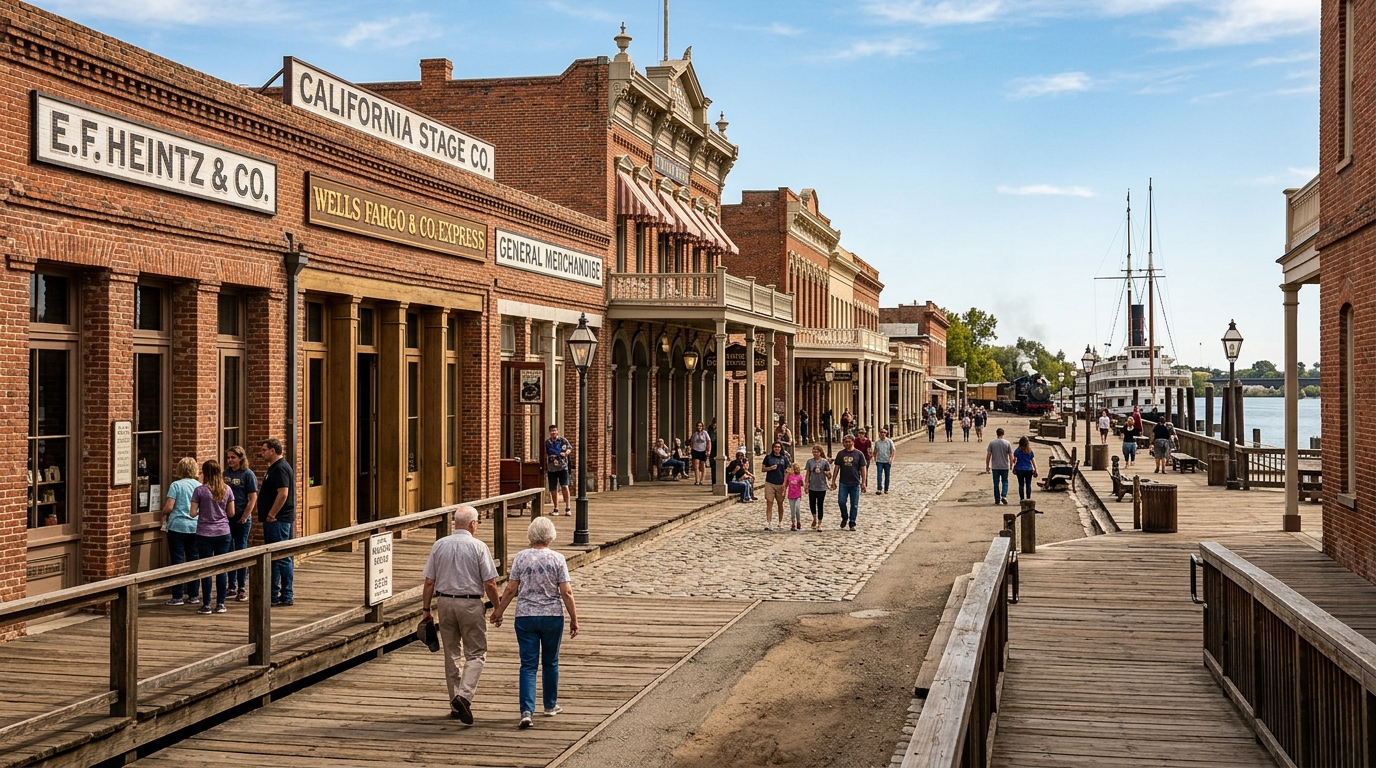
Begin by selecting one activity that will shape the schedule. For many visitors, the California State Railroad Museum is the strongest anchor because its large collection of locomotives, restored railcars and exhibits can easily occupy several hours. The museum currently publishes daily operating hours from 10 a.m. to 5 p.m., with last admission at 4:30 p.m., but visitors should confirm current hours, ticket information and closures on the official museum website before leaving.
A museum-centered plan works best when you arrive close to opening time. The galleries are easier to explore before the district becomes busier, and finishing around lunch leaves the afternoon open for the waterfront. Families should avoid promising children that every display, shop and attraction will fit into the same visit. Choose the museum as the main experience and treat everything afterward as a bonus.
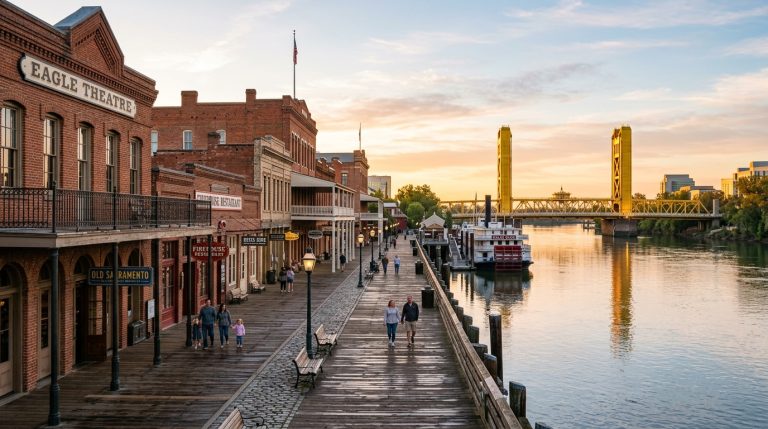
Visitors more interested in the district itself can skip a long indoor visit and focus on a self-guided walk. Start near the river, move through the historic commercial blocks, and pay attention to building details, elevated sidewalks, rail infrastructure and the relationship between the streets and the Sacramento River. This approach pairs naturally with the site’s Museums and History guide and Sacramento community guide.
Reserve seasonal experiences instead of assuming availability
Excursion trains, underground tours, evening programs and special events can change by season, day and capacity. Some require advance tickets, while others may operate only on selected dates. Check the official Old Sacramento Waterfront event calendar before building the entire day around one program. A listed attraction may be operating while a particular tour or departure is sold out.
The same rule applies to river activities. Boats, cruises and waterfront entertainment are not equally available throughout the year. Verify the operator, departure location, age rules, accessibility information and cancellation policy directly. Avoid booking several timed activities back to back. Historic streets can be crowded, parking takes time, and even a short lunch stop may create enough delay to miss the next reservation.
Give the district at least one unscheduled hour
The most useful part of a slower itinerary is open time. Set aside an hour with no ticket, reservation or required destination. Use it to browse a shop, sit beside the river, take photographs, watch trains, get a snack or revisit something that interested you earlier. This buffer also protects the schedule when a museum takes longer than expected or a family member needs a break.
Old Sacramento is compact, but the walking surface is not uniform. Wooden sidewalks, historic paving, curb transitions and crowded storefront areas can slow visitors using strollers, wheelchairs or mobility aids. Build in rest stops and check accessibility information for individual attractions rather than assuming the whole district offers the same experience.
Plan parking, transit and arrival before the fun begins
A relaxed visit can become stressful when arrival is treated as an afterthought. The district’s official transportation information currently lists metered street parking, a surface lot and two public garages, including the Old Sacramento Garage. Parking conditions, rates and validation programs can change, so review the official Getting Here page and the City of Sacramento parking information on the morning of your visit.
Arriving early generally provides more time to understand the street layout and locate the correct garage entrance. Save the parking location on your phone, photograph the nearest level or sign, and do not leave valuables visible inside the vehicle. If a business offers parking validation, confirm the current purchase requirement and participating location before expecting a discount.
Use a simple walking loop instead of crossing the district repeatedly
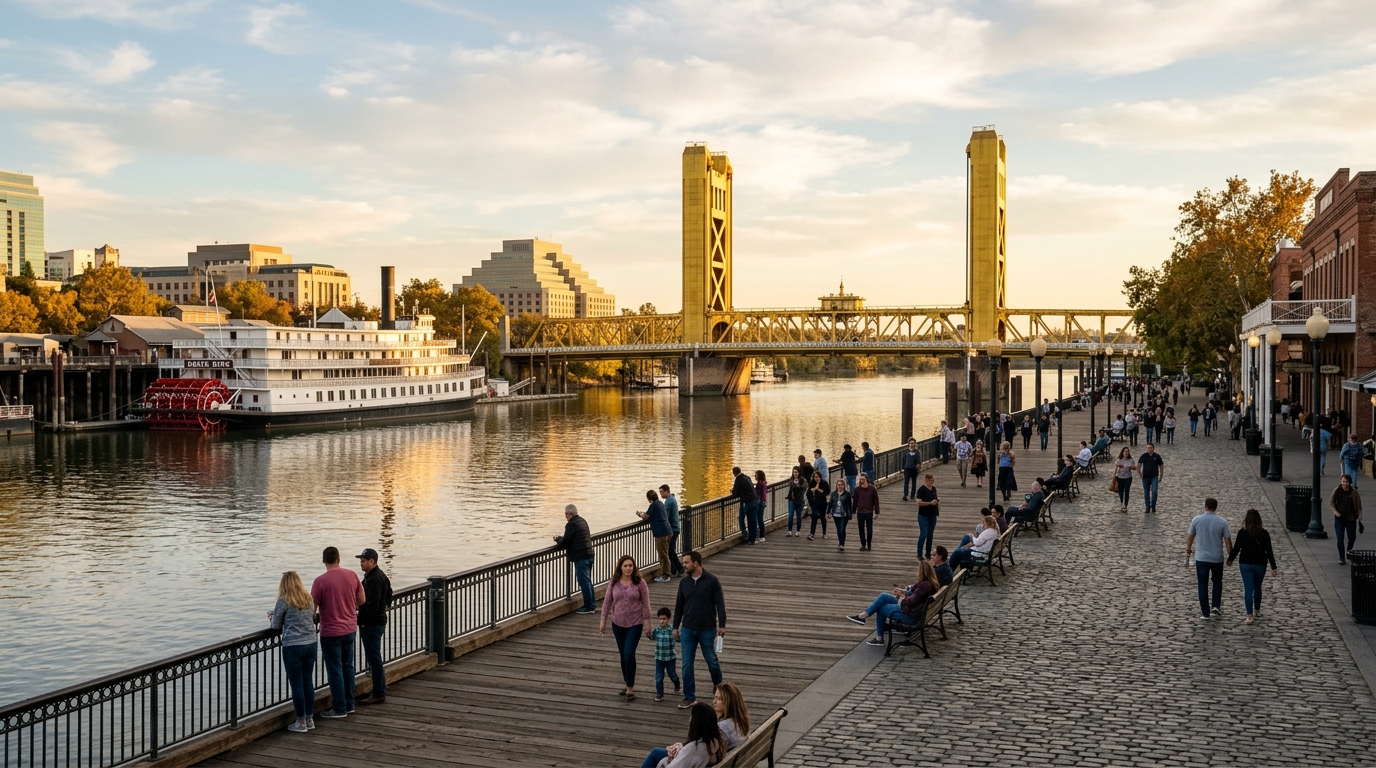
Once parked, organize the day as a loop. Begin with the anchor attraction, walk through the historic streets, stop for lunch, then finish along the riverfront before returning to the garage. This reduces unnecessary backtracking and keeps the day understandable for children and visitors unfamiliar with downtown Sacramento.
Travelers combining the waterfront with another central-city destination should be realistic about transition time. The Crocker Art Museum, Capitol area and Midtown dining districts may appear close on a map, but parking changes, summer heat and group pace can make a two-district day feel rushed. For a first visit, Old Sacramento plus one nearby stop is usually more satisfying than trying to cover the entire central city. Review the Getting Around guide before combining several areas.
Slow the Afternoon Down With Food, River Views and Flexible Stops
Choose lunch for convenience, then make the waterfront the final attraction
Old Sacramento contains a wide mix of restaurants, cafés, sweets and casual food stops. Instead of choosing only from social-media popularity, consider the group’s actual needs: indoor air-conditioning, outdoor seating, quick service, dietary options, child-friendly meals or a quieter setting. Check the business’s own current hours before visiting because directory listings and map results can lag behind operational changes.
A practical lunch sits near the middle of the route rather than requiring another drive. After eating, move toward the river for the slowest portion of the day. The Sacramento River, Tower Bridge views, Delta King and passing activity create an easy final chapter even when no additional ticketed attraction is planned. This is also the best time for photographs because the group is no longer worried about reaching a museum before closing.
Adjust the plan for heat, children and evening events
Summer heat can make exposed afternoon walking uncomfortable. Carry water, use sun protection and place indoor attractions earlier or during the hottest part of the day. Families may benefit from one major indoor experience, a straightforward lunch and a shorter river walk rather than a full schedule of shops and tours. A calm plan is more likely to leave children interested in returning.
If you are attending an evening event, do not automatically stretch a morning visit into a twelve-hour day. Consider arriving later, completing one afternoon activity, having dinner and then attending the program. Verify event times, age restrictions and ticket status directly with the organizer. Seasonal pages can advertise many experiences at once, but each has its own operating details.
Visitors who still have energy can connect the day with the broader Things to Do guide, browse relevant listings in the Attractions directory, or save a second central-city experience for another trip. Separating the Railroad Museum, Crocker Art Museum, Capitol area and riverfront into different visits often creates a better understanding of each place.
The best Old Sacramento Waterfront itinerary does not require visiting every attraction. It needs one memorable anchor, enough historical context to understand the district, a comfortable meal and unhurried time beside the river. By planning less, checking current operating information and leaving space for spontaneous stops, visitors can experience the waterfront as a real neighborhood rather than a rushed checklist. That restraint also makes future visits easier to plan and enjoy.