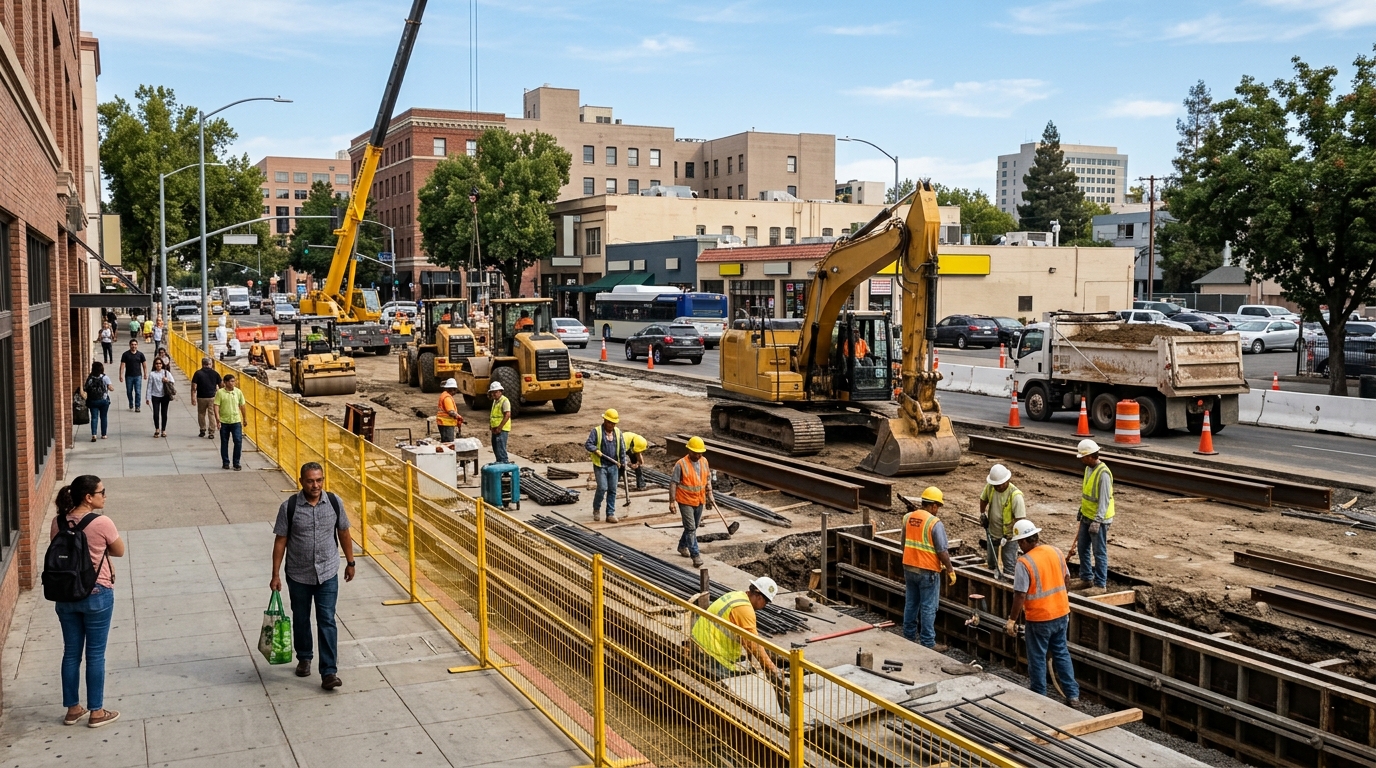
Announcements about new bridges, roads, housing communities, transit routes, parks and redevelopment projects can make major changes sound closer than they really are. A rendering may show a finished destination even though construction has not begun. An approved plan may identify thousands of future homes without confirming when the first building will be completed. A funded project may still need design work, permits, property agreements or a construction contract.
Understanding these distinctions matters in Sacramento County, where projects may be managed by the county, one of its cities, a regional agency, a transit operator or the State of California. Each organization uses different websites and reporting formats. Before describing a project as “coming soon,” readers should identify the responsible agency, find the newest dated document and determine which official milestone has actually been reached.
This guide explains the project labels used by Sacramento County California. It also shows how to read public announcements without confusing a proposal, an approved plan, allocated funding and active construction.
Read the Status Label Before Reading the Headline
Separate ideas, approvals, funding and physical construction
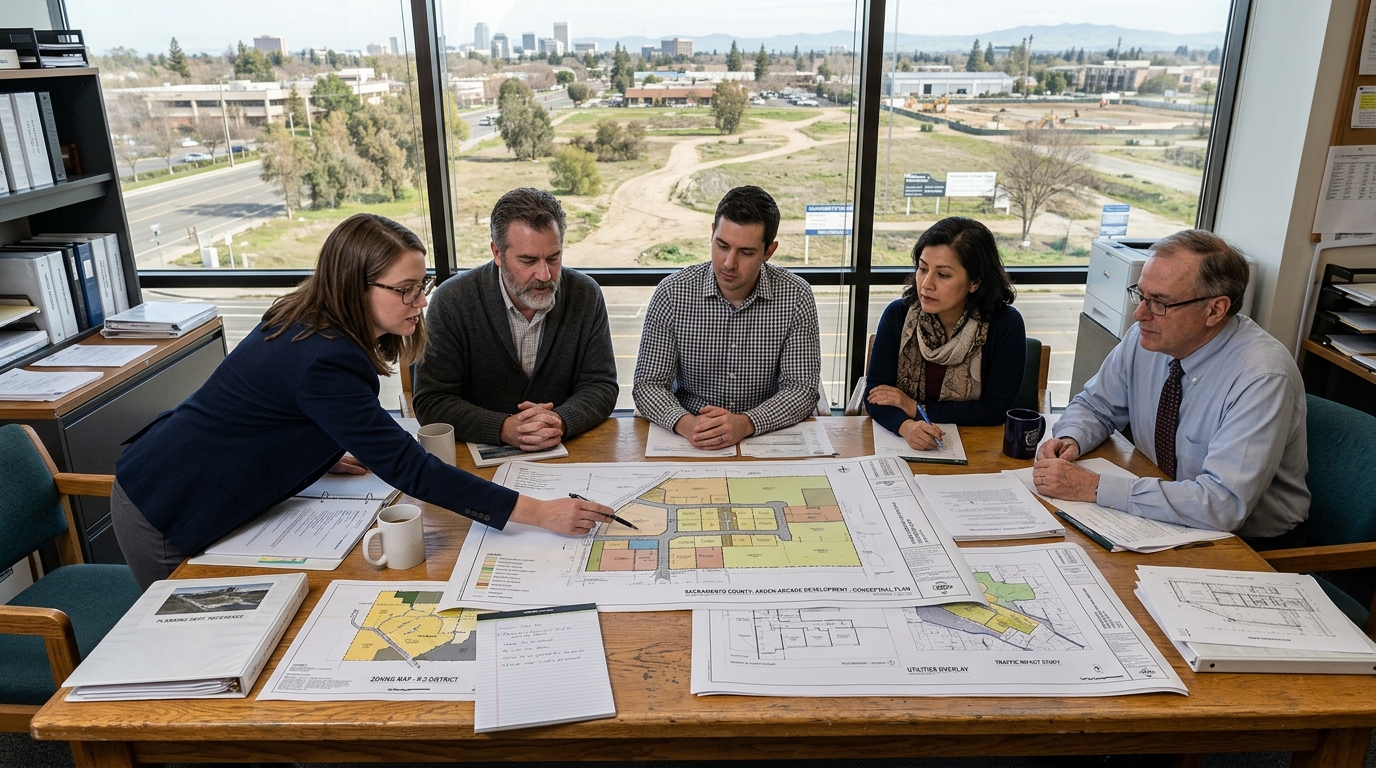
The first question should be simple: what has actually happened? A project can appear in a planning document for years before workers arrive. It can also receive one source of funding without having enough money to complete every phase. Even construction does not guarantee that all parts of a larger project are being built at the same time.
For coverage published in the Local Projects archive, each project should receive one clear status label and a “last checked” date. When different components have reached different stages, the article should identify them separately instead of assigning one label to the entire development.
Proposed and conceptual
A conceptual project is generally an early idea, vision or potential solution. Maps and renderings may be exploratory rather than final. The project may not have a selected design, environmental approval, committed funding or an identified construction schedule.
A proposed project has usually moved beyond a general idea. An applicant or public agency may have submitted plans, started studies or entered a formal review process. Proposed does not mean approved. Public hearings, environmental analysis, design changes and agency decisions may still be required.
The Jackson Township Specific Plan is a useful example. Sacramento County describes it as a proposed master-planned community of approximately 1,391 acres, with potential housing, commercial uses, schools, parks, community facilities and a wetland preserve. Those descriptions explain what the plan seeks to permit; they do not prove that every listed feature is funded or under construction.
Readers can review current planning material through the county’s official Major Projects portal. Planning pages should be read with their hearing notices, environmental documents and dated staff reports rather than through a rendering alone.
Approved and funded
An approved project or plan has received a required decision from the responsible board, council, commission or agency. Approval may establish permitted land uses, environmental findings, design parameters or a long-range policy framework. It does not necessarily authorize immediate construction.
The West Jackson Highway Master Plan, for example, was adopted by the Sacramento County Board of Supervisors in June 2025. The plan establishes a framework for land use, infrastructure and public services across a large planning area. Adoption is significant, but it should not be reported as though thousands of homes, roads and public facilities were completed or simultaneously under construction.
A funded project has an identified financial commitment for some or all of its work. Funding may come from local fees, grants, regional programs, state allocations, federal programs or several sources combined. A funding announcement should specify the amount, the funded phase and whether additional money is still needed.
The Sacramento Area Council of Governments approved its 2025 Blueprint as the region’s long-range transportation and land-use plan. That approval helps guide regional priorities, but it does not mean every project shown in the plan has a completed design, a construction contract or full funding. Long-range plans describe a regional direction; individual projects must still advance through their own processes.
Look for design, bidding and construction milestones
After approval and funding, a project may still pass through engineering, environmental clearance, utility coordination, property acquisition and bidding. These stages are less visually dramatic than a groundbreaking, but they often determine whether the published schedule remains realistic.
Under design and pre-construction
Under design means engineers, architects or consultants are developing the technical details needed to build the project. Design may be described by percentage milestones, such as preliminary, 65 percent, 90 percent or final design. The project can still change as agencies resolve drainage, utilities, accessibility, right-of-way and cost issues.
Pre-construction generally means the project is preparing to move into physical work. Activities can include utility relocation, permit approval, contractor procurement, site preparation or final scheduling. A project shown on a pre-construction list should not be described as actively under construction unless physical construction has actually started.
The I Street Bridge Replacement Project shows why this distinction matters. The City of Sacramento has an established project and bridge design, and contractor materials previously anticipated a 2026 construction start. However, bids received in 2026 substantially exceeded the estimate. Reporting in April 2026 said officials could not proceed with the submitted bids and had moved the anticipated construction start to at least 2027 without awarding a contract.
That project should therefore be described as planned but delayed, not under construction. The design and years of planning remain real, but the absence of an awarded construction contract changes the current status. Readers following transportation projects should check the site’s Getting Around guide and verify current agency notices before relying on an older completion date.
Under construction and completed
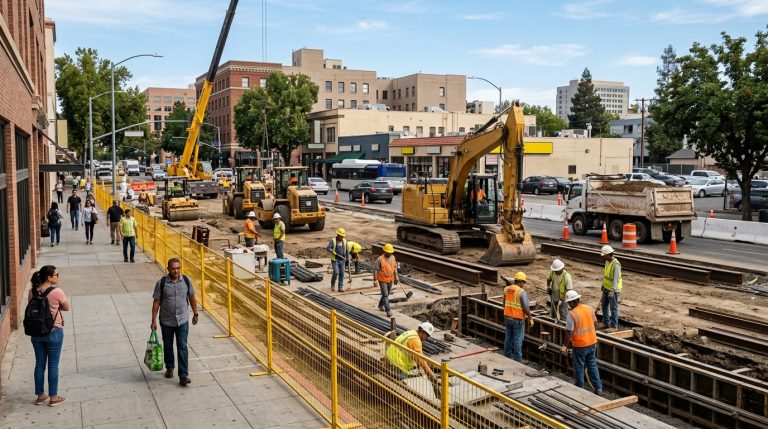
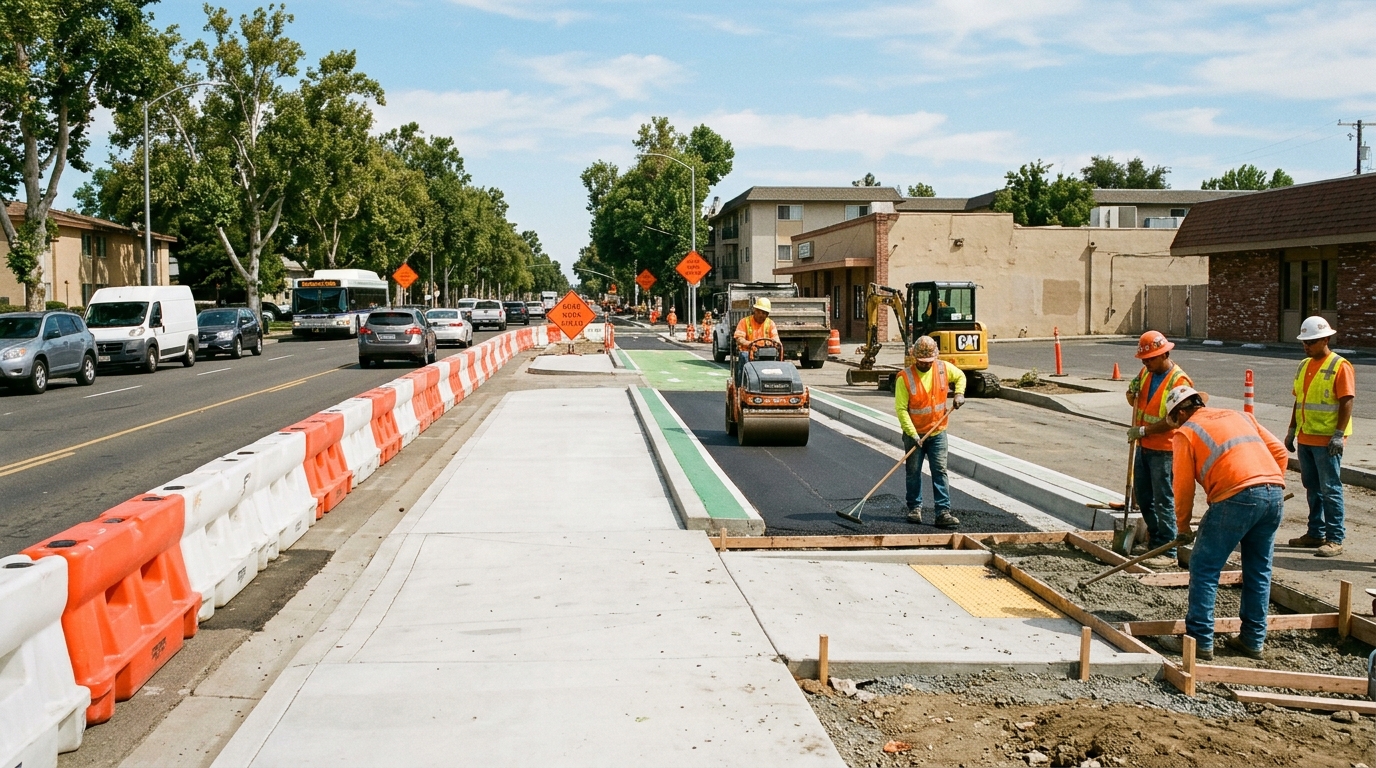
Under construction should be reserved for a project with active physical work or an active construction contract. Evidence may include an official construction notice, road closure, contractor mobilization, field work or inclusion on an agency’s current construction list.
Sacramento County’s Department of Transportation maintains separate pages for projects under construction and those still in pre-construction. Its July 2026 construction list included South Watt Avenue improvements, Arden Way Complete Streets Phase 1, Florin Road bicycle and pedestrian improvements, pavement work and other active projects. Individual pages may provide work limits, anticipated schedules and expected traffic effects.
Construction dates still need careful wording. Weather, utility conflicts, supply problems, environmental restrictions and contractor conditions can change a schedule. Use “the agency currently anticipates” rather than presenting an estimated completion date as guaranteed. Drivers and cyclists should consult current closure information instead of relying only on a project overview.
A project becomes completed when the responsible agency confirms that the defined construction work has finished. Completion does not always mean every related improvement is open. Testing, inspections, landscaping, permit closeout or a separate future phase may remain. An article should state what was completed and avoid implying that a broader master plan is finished because one component opened.
Verify the Project Through a Reliable Source Chain
Use dates, agencies and documents to build accurate coverage
Start with the agency responsible for the project. County roads in unincorporated areas may be managed by SacDOT, while projects within Sacramento, Elk Grove, Folsom or another incorporated city may appear on a city website. Regional transportation planning may involve SACOG, transit projects may involve SacRT and state highways may involve Caltrans.
Next, identify the newest meaningful update. A project page may contain an old summary while a newer council agenda, bid notice, construction bulletin or road-closure page gives a more accurate status. Compare the publication dates and look for specific actions: adoption, funding approval, contract award, notice to proceed, groundbreaking, lane closure or completion notice.
For large developments such as the Sacramento Railyards, report individual components separately. The city describes the Railyards as a 244-acre mixed-use, transit-oriented redevelopment area. Infrastructure, housing, transportation facilities, medical development and other components may each follow different schedules. Calling the entire Railyards either “proposed” or “completed” would erase those differences.
A reliable project article should answer:
- Which agency or applicant is responsible?
- What exactly is being proposed or built?
- Which approval has been granted?
- Which portion is funded?
- Has a construction contract been awarded?
- Has physical work started?
- What schedule does the agency currently publish?
- When was the information last verified?
Readers
Readers can browse broader community context through the Explore Sacramento County guide, review transportation resources in the Transportation directory and use official agency pages for the latest construction or planning documents.
Public-project coverage is most useful when it resists the excitement of a rendering and focuses on confirmed milestones. A proposed project is worth following, an approved plan may shape future growth and a funded design can represent meaningful progress. None of those stages should be presented as active construction without evidence.
Sacramento County California will label projects according to their verified stage, date every status check and update coverage when the responsible agency reaches a new milestone. That approach makes it easier for readers to understand what exists today, what has received approval and what may still change before it is built.