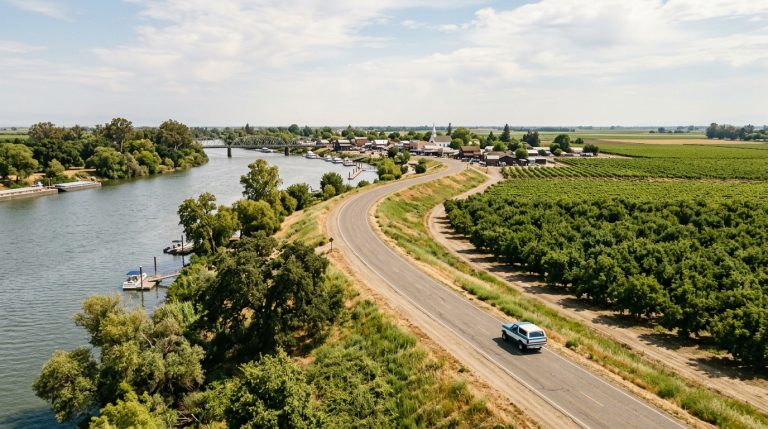
Sacramento County changes character quickly once the city gives way to levee roads, orchards, river bends and small historic communities. A drive through the Sacramento Delta can feel much farther from downtown than the mileage suggests, but this is not a route to rush. The narrow roads, bridges, working farms and living communities reward a slower plan built around history, scenery and a few carefully chosen stops.
A practical route can connect Walnut Grove, Locke and Isleton while leaving room for river views, lunch and short walks. State Route 160 and nearby River Road follow parts of the Sacramento River through a landscape shaped by agriculture, flood-control infrastructure and generations of immigrant communities. The goal should not be to photograph every town and move on. Give each place enough time to understand why it exists and how it still functions today.
Plan a Slow Route Through the Sacramento Delta
Begin with Walnut Grove and the river landscape
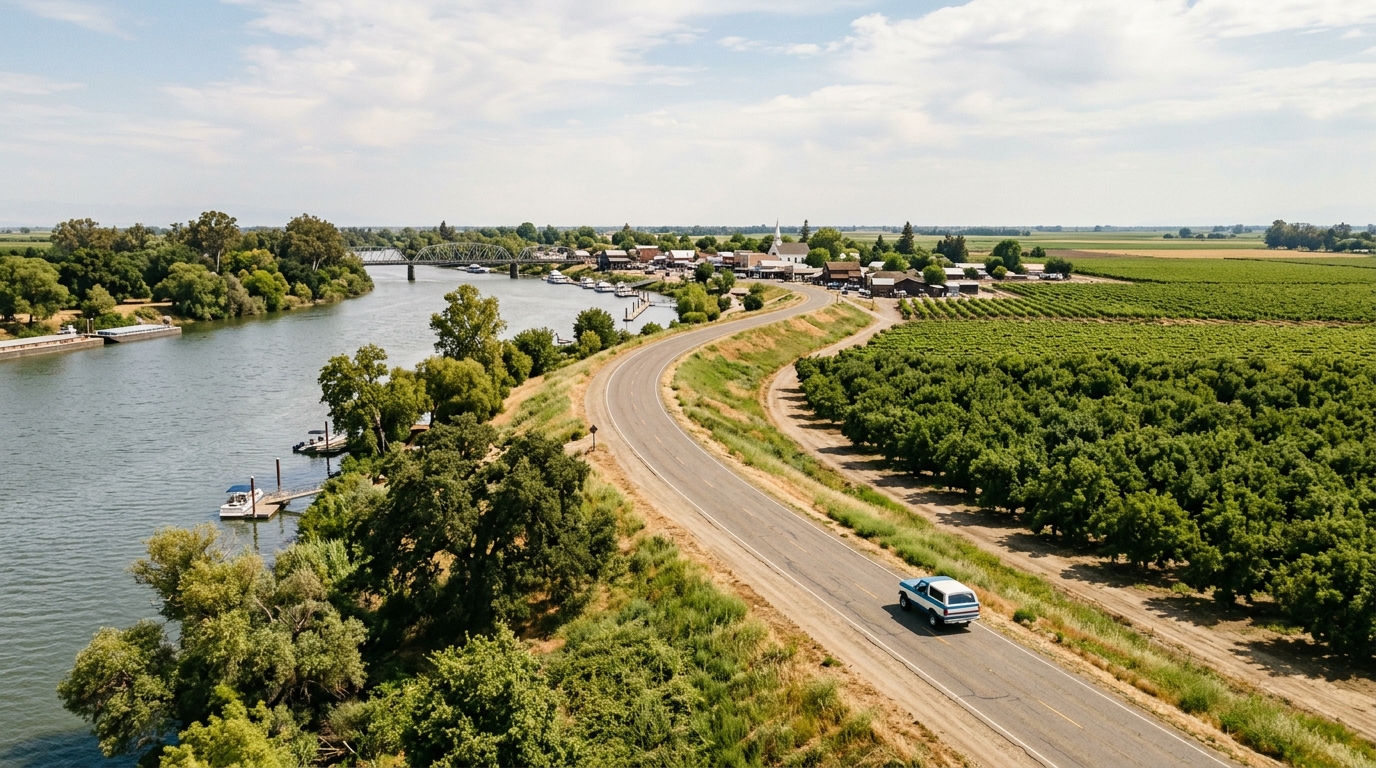
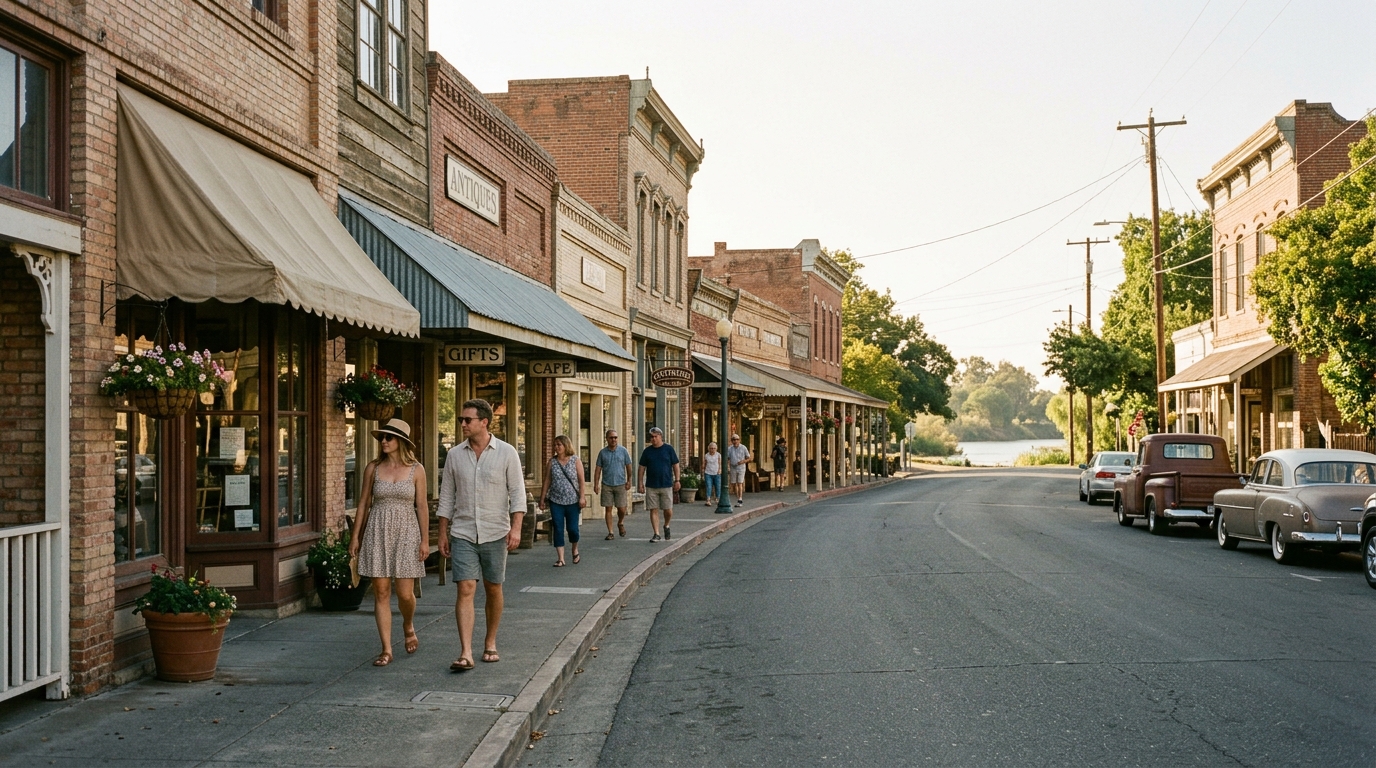
Walnut Grove works well as the first major stop because it provides a clear introduction to the Delta’s scale. The community sits beside the Sacramento River and has long served the surrounding agricultural area. From the road, visitors can see the relationship between levees, farmland, bridges and compact town centers more clearly than they can from a freeway.
Park only in a legal, clearly marked area and begin with a short walk rather than immediately driving to the next stop. Look for public river views, historic commercial buildings and the town’s layered architectural character. Walnut Grove is not an outdoor museum, so respect homes, private property, working businesses and local traffic. A quiet walk followed by coffee or lunch is more appropriate than treating every building as a photo backdrop.
This route pairs naturally with the site’s Delta and River Towns guide and the Delta River Towns Drive itinerary. Review both before leaving so the day has a clear direction without becoming over-scheduled.
Drive the levee roads for scenery, not speed
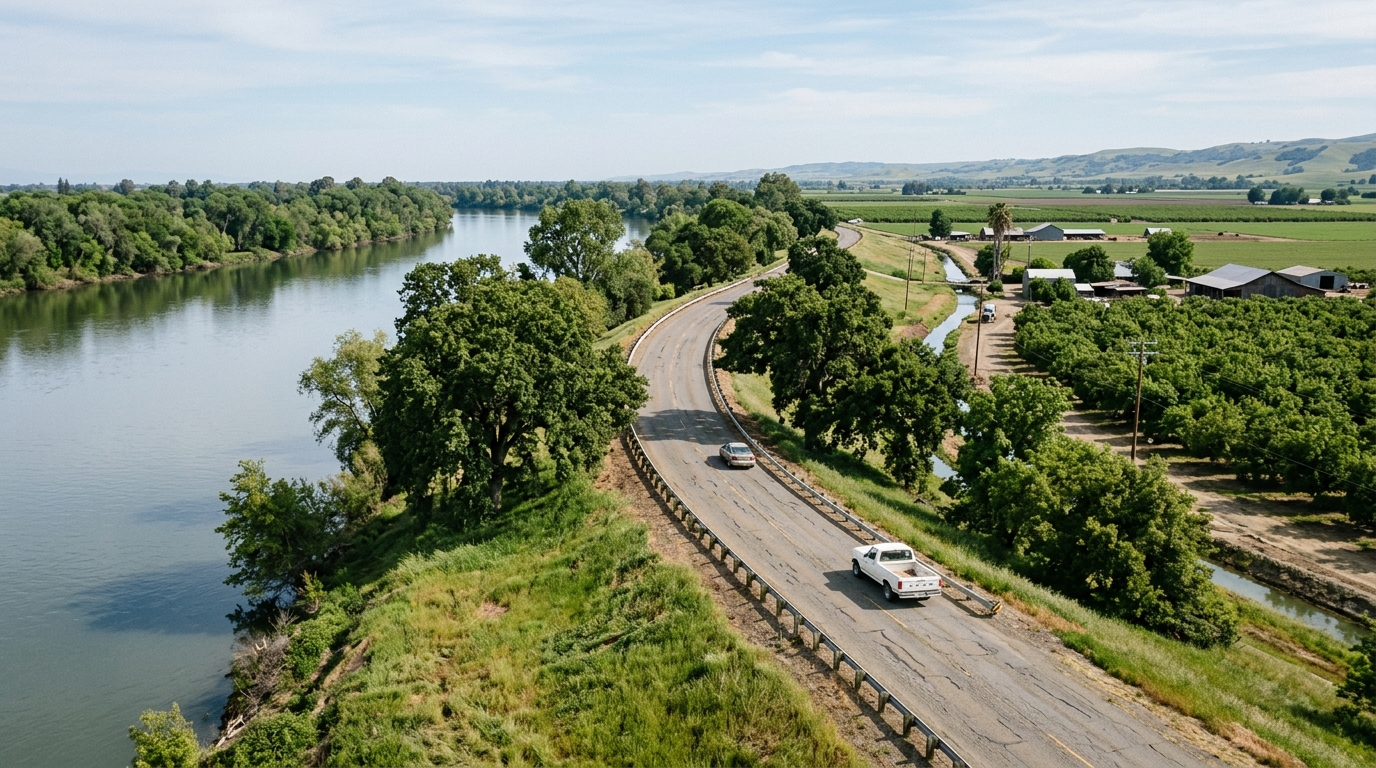
Sacramento County describes River Road as an officially designated scenic route that runs along the Sacramento River, with water on one side and productive farmland on the other. That landscape is the attraction, but it also creates driving conditions that demand attention. Expect narrow sections, limited shoulders, curves, bridge approaches, farm vehicles and occasional cyclists.
Do not stop in the travel lane for photographs. Use established public parking or a safe legal turnout, and never climb onto private levee property. Keep headlights on when visibility is poor, leave extra following distance and avoid passing unless it is clearly legal and safe. During winter fog or heavy rain, the drive may be better postponed. Check Caltrans QuickMap and the National Weather Service Sacramento forecast before departure rather than relying on conditions in central Sacramento.
Treat Locke as a living historic community
Locke deserves more than a quick roadside photograph. The community was established in 1915 and is recognized as an exceptionally intact example of a rural Chinese American town. California State Parks identifies more than fifty surviving commercial and residential buildings within the historic district and notes that Locke became a National Historic Landmark in 1990.
Walk slowly, read available interpretive material and remember that people still live and work here. Keep voices low near residences, do not look through windows or enter closed structures, and avoid blocking lanes or doorways. The town’s value comes from the survival of its full setting, not from one famous façade.
The Locke Boarding House provides important historical context when it is open. Exhibits address the boarding house, Chinese American community life and the workers connected to the Delta’s agricultural and transportation history. Museum access and guided programs can change, so confirm current information through California State Parks before planning the day around an interior visit.
Continue south to Isleton without filling every minute
From Locke and Walnut Grove, continue toward Isleton with enough daylight to enjoy the road rather than watching the clock. The City of Isleton dates its founding to 1874 and describes the community as one of the Delta’s older historic towns. Its compact center, river setting and surrounding recreation economy give it a different character from the northern stops.
Use Isleton as the slower final chapter of the drive. Walk the main commercial area, look for locally operated food or retail stops, and allow time to sit rather than immediately beginning the return trip. Business hours in small communities can be limited or seasonal, so verify a specific restaurant or shop directly before depending on it for the day’s only meal.
Choose one meal stop and one optional activity
The day will feel more coherent if lunch or an early dinner is the main Isleton activity. After the meal, choose only one addition: a short historic walk, a marina-area view, a nearby recreation stop or extra time photographing the surrounding landscape. Trying to combine town exploration, wine tasting, boating, fishing and several restaurant stops in one afternoon creates more driving than discovery.
Water-based activities need separate planning. Confirm the operator, launch location, equipment requirements, weather, age restrictions and cancellation terms before arriving. Fishing requires the appropriate current California license unless an exemption applies. Never assume a marina, dock or shoreline is open to the general public simply because it is visible from the road.
Readers interested in food and drink stops can use the Food and Drink guide, Restaurant directory and Wineries and Tasting Rooms directory. Directory information should still be checked against the individual operator’s current website or phone listing.
Make the Road Trip Safer and More Useful
Match the season, timing and group to the route
Spring and fall often suit a Delta drive because moderate temperatures make short walks more comfortable, but every season requires a different plan. Summer can bring intense inland heat even when a breeze develops near the waterways. Start earlier, carry water and avoid leaving children or pets in a parked vehicle. Winter can bring rain, low visibility and dense fog, particularly during morning hours.
Avoid building the route around an exact minute-by-minute schedule. Bridges, road work, slow vehicles and community events can change travel times. A flexible day might include Walnut Grove in the morning, Locke before or after lunch and Isleton during the afternoon. If the group becomes tired or visibility worsens, skip the final stop rather than rushing along unfamiliar roads.
Before departure, download or save the route because mobile reception can be inconsistent in rural areas. Fill the fuel tank, bring water and basic emergency supplies, and tell someone the general route if traveling alone. Drivers should keep their attention on the road while a passenger handles navigation and photographs.
Verify conditions on the morning of the trip
Check weather, road conditions, bridge notices, business hours and any event-related closures on the day of travel. California State Parks is currently preparing a classification and general plan for the Delta Meadows property near Locke and Walnut Grove. That planning process should not be interpreted as confirmation that all parts of the property are developed, staffed or open for ordinary visitor use. Enter only areas clearly identified as open to the public.
The Delta is both a visitor destination and a working landscape. Farming, flood protection, transportation and residential life continue while travelers pass through. Stay on public roads, carry out all trash, avoid drones near homes or sensitive wildlife without confirming rules, and never block gates or agricultural access.
A strong Sacramento Delta road trip is built around restraint. Choose a few communities, drive carefully, spend money at open local businesses when practical and leave room to understand the landscape. Walnut Grove introduces the river and agricultural setting, Locke provides nationally significant Chinese American history, and Isleton offers a relaxed southern stop. Together they create a Sacramento County day trip that feels distinctive without requiring a long-distance journey.